Significant figures worksheets provide students with practical problems that reinforce precision in measurements. A PDF version ensures consistent formatting, easy printing, and instant access to answer keys. These resources help teachers assess students ability to round and interpret data accurate
Definition and Importance of Significant Figures in Experimental Data
Significant figures (SF) are the digits in a measured value that convey meaningful precision. They include all certain digits, the first uncertain digit, and any trailing zeros that are known to be significant. The concept emerged from the need to communicate the reliability of experimental results and to prevent over‑interpretation of data; In chemistry, SF guide how results are reported, ensuring that calculations reflect the true accuracy of measurements. When combining values, the number of SF determines the precision of the outcome; for example, adding 12.34 g and 0.567 g yields 12.907 g, but the result should be reported as 12.9 g because the least precise measurement has two SF. Proper use of SF prevents the illusion of precision, supports error propagation, and aligns with international standards such as the IUPAC recommendations. Worksheets that include SF problems help students internalize the rules for rounding, identifying significant digits in decimals, and handling scientific notation. By practicing with answer keys, learners can verify their understanding and teachers can assess mastery of this foundational skill in quantitative chemistry. Students who master significant‑figure rules can confidently report experimental data, compare results across studies, and communicate uncertainties clearly, thereby enhancing the credibility that underpins chemical research and supports rigorous peer review.

PDF Worksheets as Teaching Tools
PDF worksheets offer consistent formatting, easy printing, and instant access to answer keys. They support visual learning, allow teachers to track progress, and provide students with a reliable, portable resource for practicing significant‑figure calculations. Students can download, edit, freely.
Advantages of PDF Format for Accessibility and Consistency
PDF worksheets are universally readable across operating systems, ensuring that every student receives the same layout regardless of device. The fixed format preserves spacing, fonts, and mathematical notation, preventing misinterpretation of decimals or scientific symbols. Because PDFs can be opened on Windows, macOS, Linux, Android, and iOS, teachers can distribute materials via email, learning management systems, or cloud storage without worrying about software compatibility. Students can view, annotate, and print worksheets offline, which is especially useful in classrooms with limited internet access. The embedded answer key can be locked or password‑protected, allowing instructors to control when students see solutions. Additionally, PDFs support hyperlinks to external resources or embedded videos, enabling interactive learning. The format’s compression keeps file sizes small, facilitating quick downloads and reducing bandwidth consumption. Finally, PDF’s search functionality lets learners quickly locate specific problems or concepts, improving self‑paced study and review sessions. Overall, the PDF format enhances accessibility, consistency, and pedagogical flexibility for significant‑figure practice. Teachers can also embed QR codes linking to supplementary videos, ensuring that visual learners receive contextual explanations. Moreover, the PDF’s ability to embed interactive checkboxes allows students to self‑grade and track progress over time. This supports remote learning for.

How to Create a Significant Figures Worksheet
Begin by selecting core concepts such as rounding, trailing zeros, and scientific notation. Draft clear problems, include difficulties, and provide space for step‑by‑step solutions. Test the layout on multiple devices to ensure readability!!
Choosing Representative Problems and Difficulty Levels
When assembling a significant‑figures worksheet, start by mapping the curriculum’s key learning objectives: rounding to a specified place value, interpreting trailing zeros, and converting between standard and scientific notation. Select a mix of problem types that mirror real‑world chemistry contexts—volume calculations for solutions, mass‑to‑volume conversions, and rate‑law expressions—all of which demand precise digit handling. For each concept, draft at least two sample questions: one that tests basic application (e.g., “Round 0.0045600 m to three significant figures”) and another that introduces a subtle twist (e.g., “Express 2.500 × 10⁻³ kg in standard notation, preserving all significant digits”). This dual‑layer approach ensures that students encounter both familiar and challenging scenarios within a single worksheet.
Next, calibrate difficulty by varying numerical complexity and the number of operations required. Simple single‑step problems should occupy roughly 40 % of the sheet, medium‑complexity problems (two or three operations) about 35 %, and advanced multi‑step problems (four or more operations, or those involving compound units) the remaining 25 %. This distribution aligns with typical assessment standards, allowing educators to gauge proficiency across a spectrum of skill levels.
To maintain consistency, employ a uniform formatting style: each problem should be numbered, followed by a concise instruction, and presented in a clean, legible font. Use consistent spacing so that answer fields are easily identifiable. Finally, cross‑check each problem against the answer key to confirm that the expected significant‑figure outcome matches the intended learning goal. By systematically selecting representative problems and balancing difficulty, the worksheet becomes a robust tool for both instruction and assessment in chemistry education.

Common Mistakes in Significant Figures

Students often misplace trailing zeros, treat them as significant when they are not. They also ignore rounding rules in scientific notation, leading to inconsistent answers. Careful review of measurement context prevents these errors for novices.
Misinterpretation of Trailing Zeros and Scientific Notation
Students frequently misinterpret trailing zeros in decimal numbers, assuming all zeros are significant when they are merely placeholders. For example, 1200.00 has four significant figures, whereas 1200 has only two unless a decimal point is explicitly shown. In scientific notation, the placement of the decimal point clarifies significance: 1.200×10³ clearly indicates four significant figures, while 1.2×10³ indicates two. Misreading these conventions leads to inconsistent rounding and incorrect propagation of uncertainty. Many worksheets present numbers like 4.0×10² or 4.00×10²; students often treat them as equivalent, ignoring the extra digit that conveys higher precision. Additionally, when adding or subtracting, the result should be rounded to the least precise decimal place, not the number of significant figures. For multiplication or division, the answer should have the same number of significant figures as the least precise factor. Worksheets that include both operations can confuse learners if they do not explicitly state the rule. Teachers should emphasize the difference between significant figures and decimal places, and provide practice problems that require students to identify the correct number of significant figures in both the given data and the final answer. Using PDF worksheets with answer keys helps reinforce proper interpretation, as students can immediately check whether their treatment of trailing zeros and scientific notation aligns with accepted conventions. In practice, instructors often use worksheets that list numbers such as 0.00456, 4.5600, and 4.560×10³. Students must recognize that 0.00456 has three significant figures, 4.5600 has five, and 4.560×10³ also has five. A common pitfall is treating 0.00456 as having only two significant figures because of the leading zeros. Another issue arises with measurements expressed in meters, centimeters, or grams where the unit may mask the precision if not properly noted. For instance, 5.00 g is more precise than 5;0 g, even though both read the same in plain text. Worksheets that ask students to convert units often omit the unit in the answer key, leading to confusion about whether the trailing zeros should be preserved. By consistently using scientific notation in answer keys, educators can eliminate ambiguity. Moreover, when students are required to report uncertainties, they must round the uncertainty to one significant figure and then round the measured value to the same decimal place as the uncertainty. Worksheets that include such tasks help students internalize the subtle distinctions between significant figures, trailing zeros, and scientific notation. Indeed

Answer Key Structure and Formatting
Answer keys should present each solution clearly, with step‑by‑step calculations. Use consistent font, bold for final values, and align equations. Include units and significant‑figure notation. Provide brief explanations for rounding choices. Extra.!!
Designing Clear Solution Pages with Step‑By‑Step Explanations
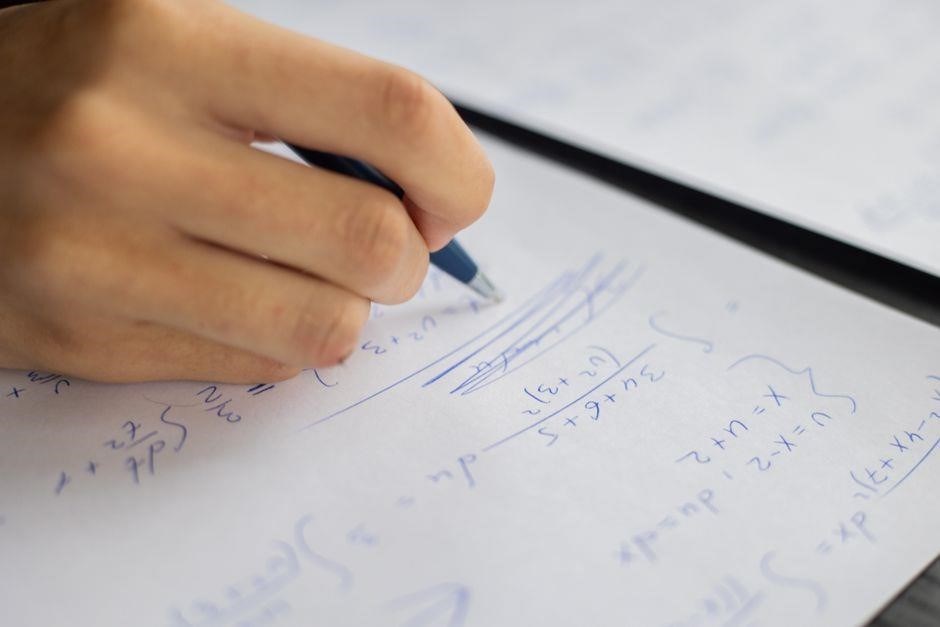
Clear solution pages enhance learning by breaking complex calculations into digestible steps. Begin each answer with the original problem statement, then list the numerical values and units in a separate line. Use bold for the final significant‑figure result, and italicize intermediate results and the final answer. A numbered
- sequence guides the reader through each operation: 1) Identify the measurement type (length, mass, volume), 2) Apply the appropriate rounding rule, 3) Perform the arithmetic, 4) Record the result with the correct number of significant figures. When dealing with scientific notation, show the conversion process explicitly, and include a brief note on why trailing zeros are significant. For multiplication or division, state the rule that the result should have the same number of significant figures as the least precise factor. When adding or subtracting, align decimal points and keep the least precise decimal place. End each solution with a concise summary that confirms the final value’s precision and unit. This structure not only aids students in verifying their work but also provides teachers with a quick reference for grading consistency. Additionally, incorporate a small icon or color highlight for common pitfalls, such as mis‑counting zeros or ignoring decimal placement. By maintaining a uniform layout across all worksheets, students develop a systematic approach to significant‑figure problems, reducing errors and building confidence in their quantitative skills.
- 2 points – Correctly counts significant figures.
- 3 points – Applies rounding rules to the requested figures.
- 2 points – Uses proper scientific notation.
- 2 points – Shows all calculation steps.
- 1 point – Provides a concise explanation of the rounding.

Downloading and Organizing PDF Resources
Students can download PDFs from educational sites, institutional libraries, or open‑access repositories. After saving, create a folder hierarchy by year, topic, and difficulty. Use consistent naming, e.g., SF_Worksheet_2026_Q1.pdf, to streamline retrieval and version control. Sort docs into folders class.
Using Online Repositories and Institutional Libraries
Students and educators can locate high‑quality significant‑figures worksheets by exploring open‑access repositories such as the Open Science Framework, MERLOT, or the National Center for Biotechnology Information’s e‑books. Universities host digital libraries where faculty upload PDFs of practice sets. When searching, use keywords like “significant figures worksheet PDF chemistry” or “SF practice problems with answers.” Once a resource is found, verify that the PDF is in a readable format and that the answer key matches the worksheet’s numbering. Downloading files via institutional VPNs ensures compliance with copyright policies, while public repositories often provide Creative Commons licenses that allow free distribution. After acquisition, store PDFs in a structured folder system—e.g., “2026/SignificantFigures/AnswerKey/” and “2026/SignificantFigures/Worksheet/”—and back them up on cloud storage or a local NAS. This organization facilitates quick retrieval for lesson planning, grading, and student access. Additionally, educators can annotate PDFs with PDF editors, highlighting key steps in the solution and adding explanatory notes for future reference. By maintaining a curated library of vetted worksheets, teachers can consistently supply students with reliable practice material that aligns with curriculum standards and assessment goals. Students may also use the answer keys to self‑check and discuss common pitfalls in a group setting.
Use worksheets to scaffold instruction, aligning problems with learning objectives. Begin with a brief review, distribute PDFs, allow timed practice, then discuss solutions using the answer key. Assess student work and adjust pacing accordingly. This approach promotes mastery and confidence.! .

Aligning Worksheets with Curriculum Standards
Teachers can embed these worksheets into assignments ensuring students practice rounding, significant‑figure calculations,and data interpretation in contexts. The PDF format allows instant printing and easy distribution across diverse learning environments.
Assessment and Grading Guidelines
Assessment rubrics should focus on precision, correct rounding, and proper use of significant figures. Assign points for accuracy, clarity of steps, and adherence to scientific notation. Provide feedback on common errors, and use a consistent grading scale for all worksheet problems. Use a rubric fair!!
Rubrics for Accuracy and Precision in Student Responses
Grading significant‑figure worksheets requires a rubric that rewards correct identification, rounding, and notation. A 10‑point scale can be used: 2 points for counting significant figures, 3 for accurate rounding, 2 for correct scientific notation, 2 for showing intermediate steps, and 1 for a brief explanation.
Deduct points for errors: miscount or wrong rounding costs 1–2 points; incorrect final value may lose 3 points. Encourage annotation of each step to show understanding. Compare with answer key, note discrepancies, explain correct approach. Provide feedback highlighting strengths and targeted practice for mistakes.
Common pitfalls: trailing zeros as significant, ignoring decimal points, misapplying rule that zeros between non‑zero digits are significant. Checklist helps students self‑check before submitting. Use daily for practice. now!
Example: Student writes 2.34 × 10³ for a measurement that should be 2.3 × 10³. They count figures (2), round (2), note notation (2), show steps (2), lack explanation (0). Total: 8/10.
Use this rubric to standardize grading and reinforce precision in science.