Pressure washers are versatile cleaning tools, essential for maintaining properties and equipment. Understanding their operation, from initial setup to
troubleshooting, ensures effective and safe use. Recognizing early warning signs prevents costly breakdowns, saving both time and resources.
Effective pressure washer troubleshooting is a vital skill, often allowing for self-repair and avoiding expensive technician visits. A manual provides guidance.
What is a Pressure Washer?
Pressure washers utilize high-pressure water spray to remove dirt, grime, and other debris from surfaces. Unlike a standard garden hose, they amplify water pressure through an engine or motor-powered pump. This concentrated force effectively cleans a wide range of materials, including siding, concrete, vehicles, and more.
A pressure washer manual details the specific operation of your model, outlining safety precautions and proper usage. Understanding the components – the engine/motor, pump, hose, wand, and nozzles – is crucial. They are invaluable tools for both residential and commercial cleaning, offering a faster and more efficient cleaning process than traditional methods.
Types of Pressure Washers (Electric vs. Gas)
Pressure washers broadly fall into two categories: electric and gas. Electric pressure washers are typically lighter, quieter, and require less maintenance, making them ideal for lighter-duty tasks around the home. They rely on an electrical outlet for power.
Gas pressure washers, powered by gasoline, deliver higher pressure and flow rates, suitable for heavy-duty cleaning. A pressure washer manual will specify the PSI (pounds per square inch) and GPM (gallons per minute) for each model. Choosing the right type depends on the frequency and intensity of cleaning needed, as detailed in the user guide.
Safety Precautions
Always consult your pressure washer manual for specific safety guidelines. Prioritize personal protective equipment and understand electrical safety protocols to prevent injuries.
General Safety Guidelines
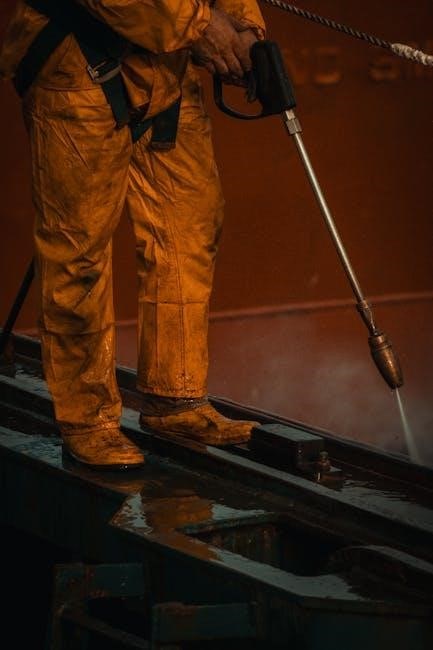
Before operating your pressure washer, thoroughly review the manual for crucial safety information. Never point the wand at yourself or others; the high-pressure stream can cause severe injury. Ensure a clear working area, free from obstructions and bystanders. Always disconnect the power source (or turn off the engine) before performing any maintenance or adjustments.
Be mindful of the surfaces you are cleaning, as improper pressure can cause damage. Avoid spraying electrical components or outlets directly. Never alter the safety features of the pressure washer, such as the pressure relief valve. Always relieve built-up pressure before disconnecting hoses or nozzles, as detailed in your manual.
Personal Protective Equipment (PPE)
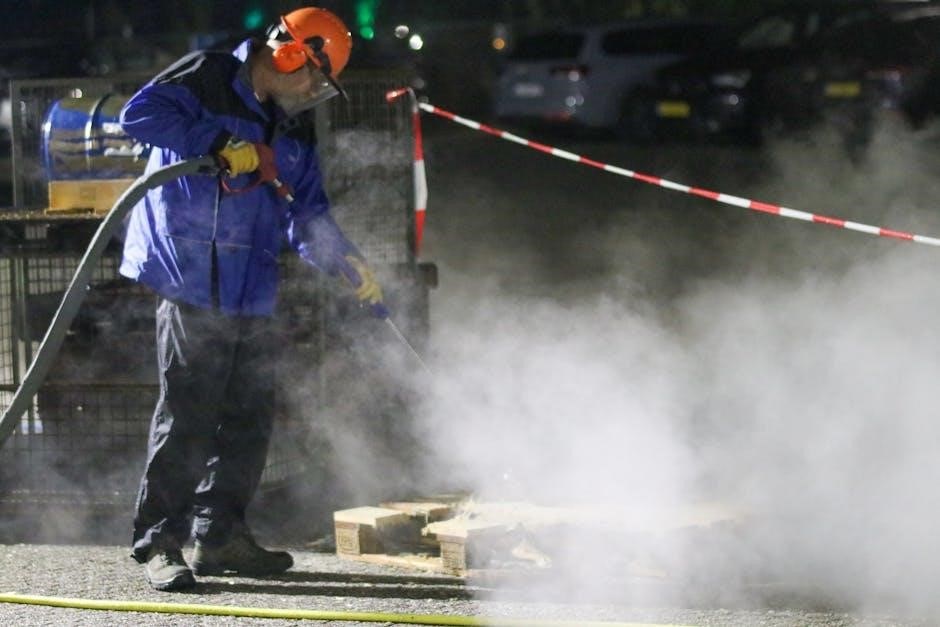
Always prioritize safety by wearing appropriate Personal Protective Equipment (PPE) when operating a pressure washer, as outlined in your manual. This includes safety glasses or goggles to protect your eyes from debris and potential chemical splashes. Wear closed-toe shoes to safeguard your feet from accidental sprays or dropped objects.
Consider wearing gloves to protect your hands from the force of the water and potential irritants. Depending on the cleaning task, a face shield or respirator may be necessary. Review your manual for specific PPE recommendations based on the intended use of the pressure washer and the cleaning solutions employed.
Electrical Safety (for Electric Models)
Electric pressure washers require strict adherence to electrical safety guidelines, detailed in your manual. Always ensure the power cord is in good condition, free from damage, and properly grounded. Never use an extension cord unless it’s specifically rated for outdoor use and the amperage capacity matches or exceeds the pressure washer’s requirements.
Avoid operating the unit in wet conditions or near standing water. Before connecting or disconnecting the power cord, always turn off and unplug the pressure washer. Refer to your manual for specific grounding instructions and GFCI (Ground Fault Circuit Interrupter) protection recommendations.
Understanding Pressure Washer Components
Pressure washer manuals detail key parts: the engine/motor, pump, hoses, and spray wands. Familiarity with these components aids in maintenance and troubleshooting efforts.
The Engine/Motor
The engine or motor is the heart of the pressure washer, providing the power necessary to drive the pump and generate high-pressure water. Pressure washer manuals clearly differentiate between gas engines and electric motors. Gas engines, typically found in heavier-duty models, require regular maintenance like oil changes and spark plug replacements, as detailed in the manual.
Electric motors are generally lower maintenance but are dependent on a consistent power supply. Manuals emphasize proper voltage requirements and cord safety. Understanding the engine/motor type is crucial for troubleshooting starting issues and performance problems. The manual will outline specific diagnostic steps for each power source, ensuring safe and effective operation.
The Pump
The pump is responsible for converting the engine’s or motor’s rotational energy into high-pressure water flow. Pressure washer manuals dedicate significant attention to pump maintenance, as it’s a critical component. Different pump types – axial cam and triplex – are explained, along with their specific needs. Manuals detail how to identify pump issues like pulsation or reduced pressure.
Regularly checking for leaks and ensuring proper lubrication, as outlined in the manual, extends pump life. Troubleshooting guides within the manual help diagnose common pump problems. Understanding the pump’s function and following the recommended maintenance schedule are vital for optimal performance and longevity.
Hoses and Connections
Pressure washer manuals emphasize the importance of inspecting hoses and connections before each use. Damage, kinks, or leaks can significantly reduce performance and pose safety hazards. Manuals detail proper connection procedures, ensuring a secure fit to prevent blow-offs during operation. They specify the correct hose diameter and pressure rating for your model.
Troubleshooting sections address issues like low pressure often stemming from faulty connections. The manual will guide you through identifying and replacing worn or damaged hoses. Proper storage, avoiding extreme temperatures and sunlight, is also covered to prolong hose life and maintain optimal functionality.
Spray Wands and Nozzles
Pressure washer manuals dedicate significant attention to spray wands and nozzles, detailing their function and proper use. Different nozzles create varying spray patterns – from wide-angle for gentle cleaning to pinpoint jets for stubborn grime. The manual illustrates each nozzle type and its recommended applications, preventing damage to surfaces.
Troubleshooting guides address uneven spray patterns, often caused by clogged nozzles. Manuals provide instructions for cleaning or replacing nozzles, ensuring optimal performance. Proper wand handling and storage are also covered, emphasizing avoiding drops and impacts to prevent damage and maintain a consistent spray.

Setting Up Your Pressure Washer
Pressure washer manuals emphasize correct setup for optimal performance and safety. This includes securely connecting the water supply and hose,
followed by attaching the spray wand as detailed in the guide.
Connecting the Water Supply
Your pressure washer manual will detail the proper procedure for connecting the water supply, a crucial first step. Ensure the water source provides adequate pressure – typically a garden hose with at least 20 PSI is recommended.
Before connecting, verify the water supply is turned off. Attach the water inlet adapter to your garden hose, then securely connect the hose to the pressure washer’s water inlet.
Slowly turn on the water supply, checking for leaks at the connection points. A tight, leak-free connection is vital for consistent performance and prevents potential damage to the unit. Refer to the manual’s diagrams for specific adapter and connection details.
Attaching the Hose
Your pressure washer manual provides specific instructions for securely attaching the high-pressure hose. Locate the hose connection point on both the pressure washer and the spray wand. Ensure both connections are clean and free of debris before proceeding.
Hand-tighten the hose fittings onto the designated ports, then use a wrench for a final, secure tightening – avoid over-tightening, which can damage the fittings.
Double-check that the hose is firmly attached at both ends to prevent leaks during operation. A properly connected hose is essential for delivering consistent water pressure and ensuring safe operation.
Connecting the Spray Wand
Refer to your pressure washer manual for detailed instructions on connecting the spray wand. Typically, this involves aligning the wand’s connector with the corresponding port on the high-pressure hose. Ensure a firm click or secure twist indicates a proper connection.
Before fully engaging, inspect the connection point for any damage or obstructions. A loose connection can lead to reduced pressure and potential injury.
Once connected, gently test the wand’s stability to confirm it’s securely attached. Proper wand connection is crucial for directing the high-pressure water stream effectively and safely.

Starting and Operating Your Pressure Washer
Always consult your pressure washer manual for specific starting procedures. Depress the trigger to relieve pressure, then switch to the ON position for operation;
Starting a Gas Pressure Washer
Before starting, ensure the gas valve is open and the fuel tank is adequately filled, referencing your pressure washer manual for specific fuel type recommendations. Check the oil level and add if necessary. Turn the ignition switch to the ‘ON’ position and engage the choke, especially in colder temperatures.
Pull the starter cord firmly and repeatedly until the engine sputters, then gradually disengage the choke. Continue pulling until the engine starts and runs smoothly. Allow the engine to warm up for a few minutes before connecting the high-pressure hose and adjusting the pressure settings. Always prioritize safety and consult the manual for detailed instructions.
Starting an Electric Pressure Washer
Before operation, verify the power switch is in the ‘OFF’ position. Ensure the pressure washer is plugged into a grounded outlet with the correct voltage, as detailed in your pressure washer manual. Connect the water supply and high-pressure hose securely. Turn the power switch to ‘ON’ and depress the trigger on the spray wand to initiate water flow and purge any air from the system.
Hold the trigger to relieve built-up pressure before switching to the ‘ON’ position. If the unit fails to start, check the power cord, outlet, and internal circuit breaker. Always consult the manual for specific troubleshooting steps.
Adjusting Pressure Settings
Pressure adjustment is crucial for effective cleaning without causing damage. Your pressure washer manual details specific settings for various surfaces. Most electric models feature a pressure regulator knob or adjustable nozzles. Lower settings are ideal for delicate surfaces like painted wood or vehicles, while higher settings tackle stubborn grime on concrete.
Begin with the lowest setting and gradually increase pressure until optimal cleaning is achieved. Always test a small, inconspicuous area first. Incorrect pressure can lead to etching, stripping paint, or other damage. Refer to the manual for nozzle charts and recommended pressures.
Proper Spraying Techniques
Effective cleaning relies on mastering proper spraying techniques, detailed in your pressure washer manual. Maintain a consistent distance from the surface – typically 8-12 inches – and use smooth, overlapping strokes. Avoid holding the nozzle too close, which can cause damage. A sweeping motion prevents streaking and ensures even cleaning.
Always spray with the grain of the material, especially wood. For stubborn stains, utilize a closer distance and a narrower nozzle angle. Rinse from top to bottom to prevent dirty water from re-contaminating cleaned areas. Refer to the manual for specific nozzle recommendations.
Troubleshooting Common Problems
Addressing issues promptly, guided by your pressure washer manual, prevents escalation. Common problems include starting failures, low pressure, and leaks – often solvable by the user.
Early detection and troubleshooting save time and money, avoiding costly service calls.
Pressure Washer Won’t Start
If your pressure washer fails to start, consult your pressure washer manual first. For electric models, verify the power source – check the outlet, circuit breaker, and extension cord for functionality. Ensure the power switch is in the ‘ON’ position.
Gas-powered units require checking the fuel level, ensuring fresh gasoline is present, and verifying the spark plug is clean and properly connected. Also, examine the safety interlocks; these must be engaged for the unit to start. Depress the trigger on the spray wand to relieve built-up pressure before starting.
If these steps don’t resolve the issue, refer to the manual’s troubleshooting section for more specific guidance or consider professional assistance.
Low Water Pressure
Experiencing low water pressure? Your pressure washer manual is the first resource. Begin by verifying a sufficient water supply to the machine – ensure the faucet is fully open. Check the inlet water filter for clogs or debris; a blocked filter significantly restricts water flow.
Inspect the high-pressure hose for kinks or damage, as these impede water delivery. Also, confirm the spray nozzle isn’t obstructed. Depress the trigger to purge air from the system, which can cause initial pressure fluctuations.
If the problem persists, consult the manual for pump-specific troubleshooting steps or seek professional repair.
Uneven Spray Pattern
An uneven spray pattern often indicates a partially clogged nozzle. Your pressure washer manual will detail nozzle cleaning procedures; typically, soaking in vinegar or using a nozzle cleaning tool resolves the issue. Inspect the nozzle for wear and tear, as damaged nozzles create inconsistent sprays.
Verify the water supply is free of debris, as sediment can affect nozzle performance. Check the high-pressure hose for kinks or obstructions that might disrupt flow. A partially blocked hose can lead to an irregular spray.
Refer to your manual for specific nozzle replacement instructions if cleaning fails.
Pressure Washer Leaking
Pressure washer leaking requires immediate attention. Your pressure washer manual stresses inspecting hose connections first, ensuring they are tight and undamaged. Check the pump for leaks, as internal seals can degrade over time, necessitating professional repair or replacement.
Examine the high-pressure hose for cracks or bulges; a compromised hose must be replaced immediately. Inspect the water inlet connection for tightness and proper sealing. A leaking trigger gun may indicate a worn O-ring, easily replaced following manual instructions.
Never operate a leaking pressure washer; it poses a safety hazard.
Detergent Not Mixing
If your pressure washer isn’t mixing detergent, consult your pressure washer manual. First, verify the detergent is compatible with your machine – some detergents can damage seals. Ensure the detergent tank is adequately filled and the suction tube isn’t clogged or kinked.
Check the detergent selector valve; it must be positioned correctly for detergent intake. A partially blocked nozzle in the siphon tube can also prevent proper mixing. Try cleaning the siphon tube thoroughly.
If issues persist, the detergent injector may be faulty, requiring professional attention.
Maintenance and Care
Regular maintenance, as detailed in your pressure washer manual, extends the lifespan of your machine. Cleaning, winterizing, and nozzle care are crucial steps.
Cleaning After Each Use
Following each use, consult your pressure washer manual for specific cleaning instructions. Disconnect the water supply and any attached hoses. Thoroughly flush the detergent tank and hose with clean water to prevent clogging and buildup. Inspect the spray wand and nozzles for debris, removing any obstructions to maintain optimal spray patterns.
Wipe down the exterior of the pressure washer with a damp cloth to remove dirt and grime. Proper cleaning after each use significantly extends the life of your equipment and ensures consistent performance. Ignoring this step can lead to corrosion and reduced efficiency over time, potentially requiring costly repairs.
Winterizing Your Pressure Washer
Before storing your pressure washer for the winter, refer to your pressure washer manual for detailed winterization steps. Drain all remaining water from the pump, hoses, and detergent tank to prevent freezing damage. Use a pump saver antifreeze solution, following the manual’s instructions, to protect internal components.
Disconnect the water supply and store hoses in a frost-free location. Consider lubricating the pump with oil as recommended. Proper winterization safeguards against costly repairs caused by freezing temperatures, ensuring your pressure washer is ready for use when warmer weather returns. Ignoring these steps can void your warranty.
Pump Maintenance
Regular pump maintenance, as detailed in your pressure washer manual, is crucial for longevity. Inspect the pump for leaks or unusual noises during operation. Periodically check and replace the pump oil, following the manufacturer’s recommended schedule and oil type. A well-maintained pump ensures consistent water pressure and prevents premature wear.
Consider using a pump protector with each use, especially during storage, to lubricate internal parts. Ignoring pump maintenance can lead to reduced performance and costly repairs. Refer to your manual for specific disassembly and cleaning instructions if needed.
Nozzle Cleaning and Replacement
Nozzles are prone to clogging, impacting spray patterns and pressure. Your pressure washer manual will detail cleaning procedures, often involving a nozzle cleaning tool or soaking in vinegar. Regularly inspect nozzles for wear and tear, as damaged nozzles reduce efficiency and can cause uneven cleaning.
Replacing nozzles is straightforward; ensure you select the correct replacement type for your specific model. A variety of nozzles offer different spray angles and intensities. Always disconnect the pressure washer before nozzle maintenance. Ignoring nozzle issues leads to reduced cleaning power and potential pump strain.

Advanced Troubleshooting
Advanced issues, like overheating or pump pulsation, require detailed diagnosis. Consult your pressure washer manual for specific guidance and safety precautions before attempting repairs.
Ignoring these problems can cause further damage, potentially requiring professional intervention and costly component replacements.
Overheating Issues
Overheating in a pressure washer signals a serious problem demanding immediate attention. Your pressure washer manual is the first resource; it details specific causes and solutions for your model. Common culprits include insufficient ventilation, a clogged cooling fan, or low oil levels in gas-powered units.
Before continuing operation, allow the unit to cool completely. Inspect the cooling fan for obstructions and ensure adequate airflow around the engine or motor. Check the oil level (gas models) and top up if necessary. If overheating persists despite these checks, consult a qualified technician, as internal damage may have occurred. Ignoring overheating can lead to catastrophic engine failure.
Pump Pulsation
Pump pulsation, characterized by an inconsistent spray or fluctuating pressure, often indicates air within the pump or a worn-out unloader valve. Your pressure washer manual will guide you through the process of purging air from the system, typically by depressing the trigger on the spray wand until a steady stream emerges.
If pulsation continues, the unloader valve—responsible for regulating pressure—may be failing and require replacement. Consult your manual for specific instructions on accessing and replacing this component. Ignoring pump pulsation can reduce cleaning effectiveness and potentially damage the pump over time. A professional repair might be necessary.
Trigger Issues
Trigger issues, such as a trigger that won’t engage, sticks, or leaks, are common problems addressed in your pressure washer manual. Often, these stem from a clogged trigger assembly due to mineral buildup or debris. The manual will detail how to safely disassemble and clean the trigger mechanism.
Inspect the trigger’s O-rings and seals for wear or damage, replacing them if necessary. If the trigger remains unresponsive after cleaning and inspection, the entire trigger assembly might need replacement. Always disconnect the power source before attempting any repairs, and refer to the manual’s diagrams for proper reassembly.
Repair or Replace?
Your pressure washer manual guides decisions on repair versus replacement. Consider repair costs, the machine’s age, and the severity of the issue.
Professional assessment helps determine if fixing is economical, or if a new unit is more practical.
When to Call a Professional
Your pressure washer manual often details limitations for user repairs. If you encounter complex issues, or lack the necessary expertise, seeking professional help is crucial. Attempting repairs beyond your skill level can worsen the problem, void warranties, or even create safety hazards.
Specifically, call a technician for internal engine/motor problems, pump repairs, or any electrical issues. Ignoring warning signs, like overheating or significant pressure drops, can lead to expensive damage. A professional diagnosis ensures accurate repairs and extends the lifespan of your equipment, ultimately saving you money and frustration. Don’t hesitate to prioritize safety and expertise.
Cost of Repairs vs. Replacement
Your pressure washer manual doesn’t cover long-term cost analysis, but it’s vital. Before committing to repairs, obtain a detailed quote from a qualified technician. Compare the repair cost to the price of a new, comparable model. Consider the age and overall condition of your current pressure washer.
If repairs exceed 50-70% of the replacement cost, or if the unit is nearing the end of its expected lifespan, replacement is often the more economical choice. Newer models frequently offer improved efficiency and features. Factor in potential downtime and the value of your time when making this decision.
Frequently Asked Questions (FAQs)
Consult your pressure washer manual for specific guidance. Purging air and relieving pressure are crucial steps, ensuring optimal performance and preventing damage to the pump system.
Purging Air from the System
Before initial use, and periodically thereafter, it’s essential to purge air from your pressure washer system. Your pressure washer manual will detail the specific procedure for your model, but generally involves connecting a high-pressure hose to both the spray wand and the pressure washer itself.
Turn the water supply fully on. Then, depress the trigger on the spray wand. This action forces water through the hose, expelling any trapped air. Continue depressing the trigger until a steady stream of water emerges, free of air bubbles. This ensures proper pump operation and prevents damage caused by air compression within the system.
Relieving Built-Up Pressure
Your pressure washer manual emphasizes the importance of safely relieving built-up pressure before disconnecting hoses or performing maintenance. After use, or before any service, depress and hold the trigger on the spray wand. This action releases the pressure remaining within the pump and hose.
Continue holding the trigger while switching the pressure washer to the “OFF” position. This prevents pressure rebound and potential injury. Never attempt to disconnect components while pressure remains in the system. Always follow the manufacturer’s instructions detailed in your manual for safe operation and maintenance procedures.
Importance of Troubleshooting
Your pressure washer manual highlights that consistent troubleshooting is crucial for extending the lifespan of your equipment and avoiding unnecessary repair costs. Overlooking minor issues, like a slight pressure drop or a small leak, can escalate into significant and expensive problems.
Regularly assessing performance allows for early detection and correction of faults. Often, simple solutions can be implemented by the user, saving time and money. A proactive approach, guided by the manual, minimizes downtime and ensures optimal cleaning performance. Don’t ignore warning signs!