Finding the correct road bike size is crucial for comfort, efficiency, and performance. Charts utilize height,
while understanding frame measurements—inches, centimeters, or letters—is key to a perfect fit.
Why Proper Bike Fit Matters
A well-fitted road bike dramatically enhances your cycling experience. Incorrect sizing leads to discomfort, pain, and potential injuries, hindering performance and enjoyment. Proper fit maximizes power transfer, allowing you to ride more efficiently and further. It minimizes strain on your back, knees, and neck, preventing long-term health issues.
Choosing the right size isn’t just about height; it considers inseam, torso length, and flexibility. A professional bike fit can fine-tune adjustments for optimal positioning. Ignoring fit can negate the benefits of an expensive bike, while a correct fit unlocks its full potential, making every ride more pleasurable and productive.
Understanding Road Bike Geometry
Road bike geometry significantly impacts handling and comfort. Key measurements include top tube length, seat tube angle, head tube angle, and wheelbase. A longer top tube promotes a more stretched, aerodynamic position, ideal for racing. A shorter top tube offers a more upright, comfortable posture for endurance riding.
Steeper head tube angles result in quicker steering, while slacker angles provide more stability. Understanding these angles helps determine a bike’s responsiveness. Reach and stack measurements are also crucial, defining the distance to the handlebars and overall height. Geometry varies between brands and models, influencing the overall ride feel.

Road Bike Size Charts by Height
Height is a primary factor in determining road bike size, but charts vary by manufacturer. Consider inseam and torso length for a more precise fit.
Men’s Road Bike Size Chart
Generally, men’s road bike sizing correlates with height, though individual builds necessitate adjustments. A rider between 5’8” and 5’10” typically fits a 54cm or medium frame. Those ranging from 5’10” to 6’0” usually require a 56cm to 58cm frame, often categorized as large. For individuals exceeding 6’0”, a 60cm or extra-large frame is generally recommended.
However, these are starting points. Inseam plays a vital role; a longer inseam might necessitate a larger frame even at a given height. Bike companies like Specialized offer detailed charts, considering both height and inseam for optimal sizing. Remember to consult specific brand guidelines, as sizing conventions can differ.
Women’s Road Bike Size Chart
Women’s road bike sizing often differs from men’s due to generally shorter torso and limb proportions. A woman between 5’2” and 5’5” typically fits a 48cm or small frame. Riders between 5’5” and 5’8” usually require a 50cm to 52cm frame, often categorized as medium. For women taller than 5’8”, a 54cm or larger frame is generally recommended.
However, these are guidelines, and individual anatomy is crucial. Women often benefit from narrower handlebars and smaller crank arms. Specialized and other brands provide women-specific geometry and sizing charts. Always prioritize a comfortable reach and standover height, consulting brand-specific resources for the most accurate fit.

Measuring Yourself for a Road Bike
Accurate self-measurement is vital for finding the right fit. Key measurements include standover height, inseam, and torso length, ensuring optimal bike sizing and comfort.
Standover Height Measurement
Standover height is a fundamental measurement for determining initial frame suitability. To measure, stand over the bike’s top tube with both feet flat on the ground. There should be a clearance of 1-3 inches (2.5-7.6 cm) between the top tube and your crotch.
This ensures safe dismounting and prevents injury. Insufficient clearance indicates a frame that’s too large, while excessive clearance suggests a frame that might be too small. Remember, standover height is a starting point, not the definitive sizing factor. It’s crucial to consider other measurements like inseam and reach for a truly personalized fit. Different bike types, like mountain bikes, require more standover clearance.
Inseam Measurement
Accurate inseam measurement is vital for road bike sizing, providing a key data point for frame selection. Stand with your back against a wall, wearing cycling shoes. Place a book between your legs, mimicking a saddle, and measure from the top of the book to the floor.
This measurement, typically in inches or centimeters, helps determine the appropriate seat tube length. Bike size charts often correlate inseam with suggested frame sizes. It’s more precise than relying solely on height. Ensure the measurement is taken accurately for optimal results, as even small discrepancies can impact fit and comfort during rides.
Torso Length Measurement
Determining torso length is essential for achieving proper reach and comfort on a road bike. Stand with your back against a wall, feet shoulder-width apart. Measure from the top of your pubic bone to the notch where your collarbone meets your neck.
This measurement, alongside inseam and arm length, influences stem length and handlebar selection. A longer torso generally requires a longer reach. Utilizing torso length helps refine bike fit beyond basic height and inseam charts, ensuring optimal riding posture and minimizing strain. Accurate measurement contributes to a more efficient and enjoyable cycling experience.

Frame Size vs. Bike Size
Frame size isn’t the whole story; consider top tube length and reach for a precise fit. Systems vary—cm, inches, S, M, L—across brands.
Different Frame Measurement Systems (cm, inches, S, M, L)
Road bike frames are sized using various systems, creating potential confusion for buyers. Traditionally, frames were measured in centimeters (cm) or inches, representing the seat tube length from the center of the bottom bracket to the top of the seat tube. However, many manufacturers now utilize a size range denoted by letters – Small (S), Medium (M), Large (L), and Extra Large (XL) – which can differ significantly between brands.
These lettered sizes are generally correlated with rider height, but it’s not a universal standard. Some brands prioritize effective top tube length, a more accurate indicator of reach, while others focus on stack and reach measurements. Therefore, relying solely on a lettered size can be misleading; always consult the specific brand’s size chart for the most accurate recommendation.
Top Tube Length and Reach
Top tube length, historically crucial, is the horizontal distance from the head tube to the seat post. It significantly impacts rider reach and overall bike handling. However, modern bike geometry increasingly emphasizes ‘reach’ – the horizontal distance from the bottom bracket to the head tube – as a more comprehensive measurement.
Reach considers the head tube angle, providing a better indication of how stretched out a rider will be. A longer top tube/reach generally suits flexible riders seeking an aggressive position, while shorter lengths favor a more upright, comfortable posture. Understanding both measurements, alongside stack (vertical distance), is vital for achieving optimal fit and control.

Components Affecting Bike Fit
Beyond frame size, adjustments to components like saddle height, handlebar reach, and stem length are essential. These fine-tune the fit for optimal comfort and power.
Saddle Height Adjustment
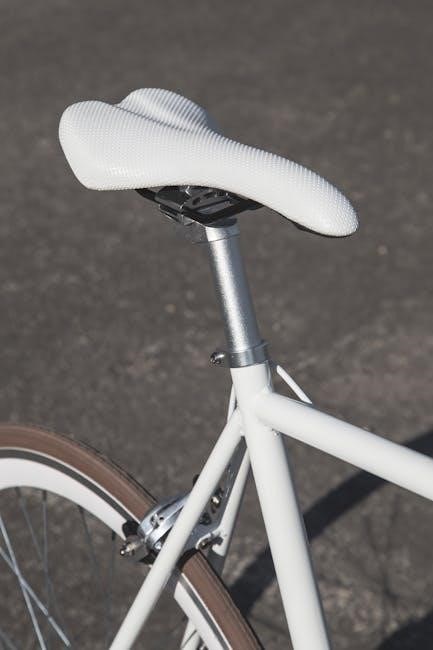
Proper saddle height is paramount for efficient pedaling and preventing injuries. A common starting point involves measuring from the center of the bottom bracket to the top of the saddle along the seat tube. However, individual biomechanics play a significant role.
When seated on the bike with the pedal at the 3 o’clock position, your leg should be almost fully extended, with a slight bend at the knee. Too high a saddle can cause rocking hips, while too low a saddle leads to inefficient power transfer and potential knee strain. Small adjustments—a few millimeters at a time—are recommended, followed by test rides to assess comfort and performance.
Handlebar Reach and Drop
Handlebar position significantly impacts comfort and aerodynamics. ‘Reach’ refers to the horizontal distance from the saddle to the handlebars, influencing your torso angle. ‘Drop’ describes the vertical difference between the saddle and the handlebars, affecting how aggressively you’re positioned.
A shorter reach and shallower drop promote a more upright, comfortable posture, ideal for endurance riding. Conversely, a longer reach and greater drop encourage a more aerodynamic, aggressive position suited for racing or fast group rides. Adjustments are made via stem length and angle, and sometimes handlebar selection, ensuring a comfortable yet powerful riding experience.
Stem Length and Angle
The stem connects your handlebars to the steerer tube, playing a vital role in bike fit adjustments. Stem length directly influences reach – a longer stem increases reach, while a shorter one decreases it. Angle affects handlebar height; a positive angle raises the bars, and a negative angle lowers them.
Fine-tuning stem length and angle allows riders to optimize their position for comfort and efficiency. Small adjustments can significantly impact handling and reduce strain. Consider these factors alongside handlebar reach and drop to achieve a balanced and personalized fit, maximizing performance and enjoyment on every ride.

Professional Bike Fitting
A professional bike fit ensures optimal comfort and efficiency by analyzing your body and riding style. Experts adjust components for a personalized, injury-preventative setup.
Benefits of a Professional Bike Fit
Investing in a professional bike fit yields substantial advantages for cyclists of all levels. Beyond simply determining the correct frame size, a fit addresses individual biomechanics, flexibility, and riding goals. This personalized approach minimizes the risk of injuries, such as knee pain, back discomfort, and numbness, commonly associated with improper bike setup.
Furthermore, a proper fit enhances pedaling efficiency, allowing you to transfer more power to the wheels and ride faster with less effort. It optimizes your position for aerodynamics, reducing wind resistance and improving overall performance. A skilled fitter will meticulously adjust saddle height, handlebar reach, and stem length to create a harmonious connection between you and your bike, maximizing comfort and enjoyment on every ride.
What to Expect During a Bike Fit
A professional bike fit is a comprehensive process, typically beginning with a detailed interview about your cycling history, goals, and any existing physical limitations. Expect a thorough assessment of your flexibility, posture, and biomechanics, often involving video analysis of your riding technique.
The fitter will then make adjustments to your bike, starting with saddle height and fore/aft position, followed by handlebar reach and drop. Cleat positioning is also crucial, impacting pedaling efficiency and knee alignment. Throughout the process, you’ll provide feedback, allowing the fitter to refine the setup until you achieve optimal comfort and power transfer. Expect several iterations and a detailed report outlining the final adjustments.

Road Bike Sizing for Different Body Types
Body proportions impact fit; longer legs may require a smaller frame with a longer seatpost, while a shorter torso benefits from a shorter reach.
Sizing for Longer Legs
Riders with proportionally longer legs often find standard frame sizes feel cramped, hindering optimal power transfer and comfort. To address this, consider selecting a smaller frame size than typically suggested by height alone. This allows for a longer seatpost extension, effectively raising the saddle to the correct height without compromising reach.
A longer seatpost also contributes to a more comfortable ride by providing additional compliance and absorbing road vibrations. Pay close attention to standover height to ensure adequate clearance, and prioritize a professional bike fit to fine-tune saddle position and overall bike setup for your unique proportions.
Sizing for Shorter Torso
Individuals with shorter torsos often require a frame with a shorter reach to avoid excessive stretching and maintain a comfortable, efficient riding position. Selecting a larger frame size than typically recommended by height can sometimes be beneficial, but it’s crucial to compensate with a shorter stem.
This combination allows for a more upright posture, reducing strain on the back and shoulders. Prioritize a bike fit to determine the optimal stem length and handlebar position. A professional assessment ensures proper weight distribution and prevents discomfort during longer rides, maximizing performance and enjoyment.

Brand-Specific Size Charts (Example: Specialized)
Specialized provides detailed sizing charts, considering both height and inseam, to pinpoint the ideal frame size for their road bikes, maximizing comfort and efficiency.
Navigating Specialized Road Bike Sizing
Specialized’s approach to road bike sizing emphasizes a comprehensive fit process. Their size charts aren’t solely based on height; they incorporate inseam measurements for greater accuracy. You’ll find charts categorized by bike model – Tarmac, Roubaix, Allez – as geometry varies between each.
The charts typically display sizes as S, M, L, XL, and XXL, correlating to specific frame sizes in centimeters. Specialized also provides a “fit calculator” on their website, requesting detailed body measurements to recommend a starting point. Remember, this is a suggestion; a professional bike fit is always recommended to fine-tune the setup for optimal performance and comfort. Exploring their online resources is a great first step!
Common Road Bike Sizing Mistakes
Incorrect sizing often leads to discomfort and inefficiency. Choosing a frame too large or small impacts handling and power transfer, hindering performance and enjoyment.
Choosing a Frame That’s Too Large
Selecting a road bike frame that’s too large presents several challenges. Riders often experience a stretched-out position, making it difficult to comfortably reach the handlebars. This can lead to lower back pain and shoulder strain, diminishing the enjoyment of your rides. Handling becomes less precise, as the longer reach affects steering responsiveness.
Furthermore, a larger frame can compromise power transfer, as your body mechanics are less efficient. You might find yourself struggling to maintain a consistent cadence and generate optimal force on the pedals. Standover height will also be an issue, potentially creating safety concerns when stopping quickly. Proper fit is paramount for both performance and injury prevention.
Choosing a Frame That’s Too Small
Opting for a road bike frame that’s too small creates a cramped and uncomfortable riding position. Riders often feel scrunched up, with knees too close to the chest and limited space for efficient pedaling. This can lead to knee pain and discomfort, hindering performance and enjoyment. Handling can become twitchy and unstable due to the shorter wheelbase.
A smaller frame restricts breathing and limits upper body movement, reducing power output. You may experience back pain from being overly flexed. Proper extension and reach are vital for efficient cycling. Ultimately, a frame that’s too small compromises comfort, efficiency, and overall riding experience.